
Best Campervan Leisure Batteries UK
Choosing the right leisure battery is one of the most important decisions in a campervan electrical system.
We compare lithium batteries for different budgets, explain the specifications that matter and help you choose the right capacity for your van.
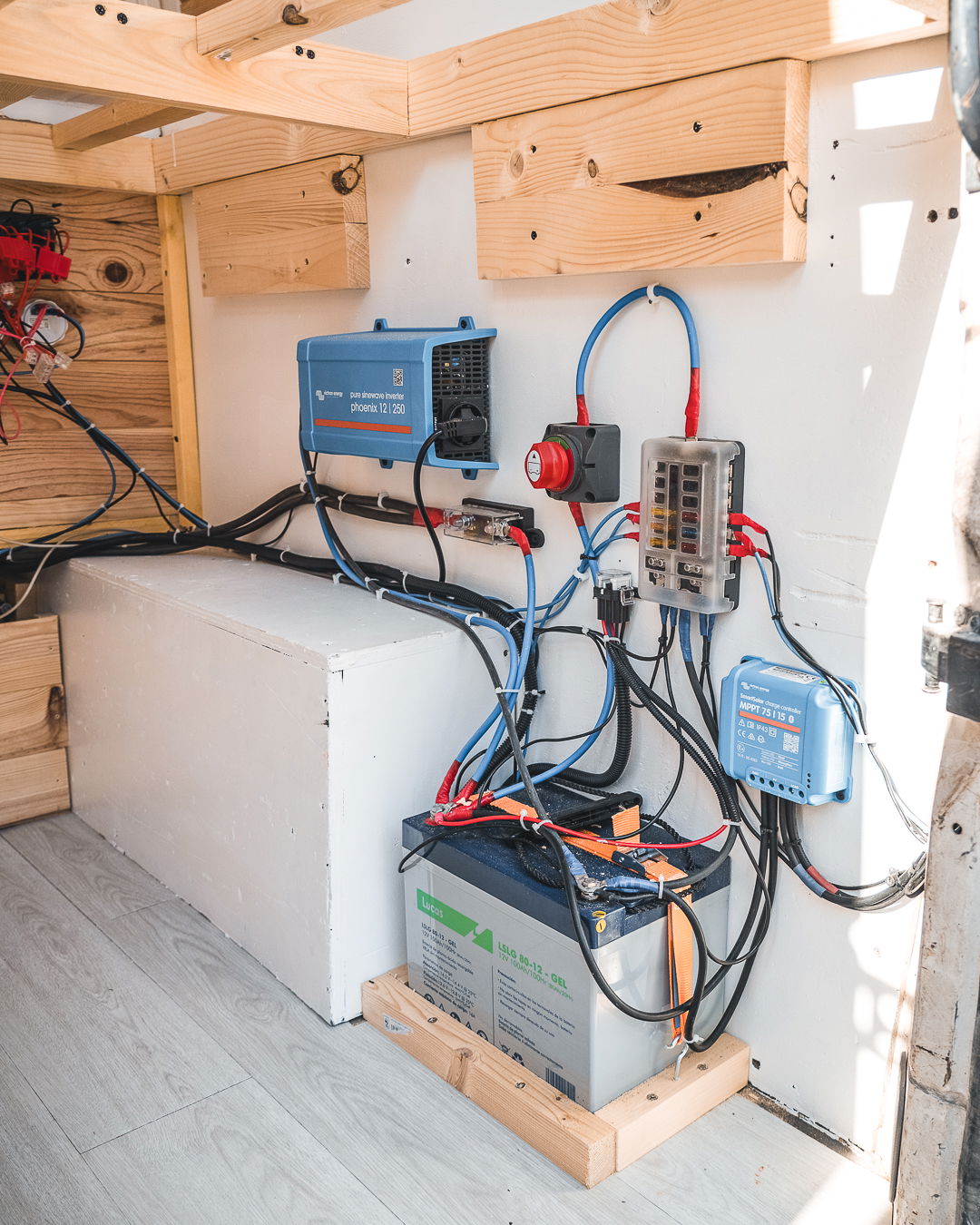
Your leisure battery stores the energy that powers your campervan when you’re not connected to mains electricity. Your fridge, lighting, water pump, USB sockets and inverter all depend on it.
For many modern off-grid campervans, LiFePO4 lithium batteries are an attractive option because they offer high usable capacity, relatively low weight and long cycle life.
Best Campervan Leisure Batteries
These three options cover premium high-capacity installations, compact budget systems and affordable Bluetooth monitoring.
12V 200Ah Self-Heating LiFePO4 Battery
A feature-rich 200Ah lithium leisure battery aimed at larger off-grid electrical systems.
The Amazon listing describes Bluetooth monitoring, automatic self-heating, a smart battery management system and low-temperature protection.
Why Consider It?
- Large 2,560Wh nominal capacity
- Bluetooth battery monitoring
- Automatic self-heating
- Low-temperature charging protection
- Integrated smart BMS
- Suitable for investigating larger off-grid systems
Check the exact manufacturer, continuous BMS current, dimensions, warranty and charging requirements on the Amazon listing before ordering.
View Premium Battery on Amazon →Renogy Core Mini 100Ah LiFePO4
The Renogy Core Mini is a compact lithium leisure battery worth considering for campervan owners who want reliable basic lithium storage without paying for premium extras.
Why Consider It?
- Compact design
- 100Ah lithium capacity
- 100A continuous discharge rating
- Low-temperature charging protection
- Suitable for modest campervan electrical systems
ECO-WORTHY 100Ah Bluetooth LiFePO4
The ECO-WORTHY 100Ah Bluetooth battery offers an alternative for campervan owners who want app-based battery monitoring without moving into the premium price category.
Why Consider It?
- Bluetooth battery monitoring
- 100Ah nominal capacity
- Integrated battery management system
- Low-temperature protection
- Potentially attractive value
Campervan Leisure Battery Comparison
| Battery | Capacity | Bluetooth | Self-Heating | Best For |
|---|---|---|---|---|
| 200Ah Premium Battery | 200Ah / 2,560Wh | Yes* | Yes* | High-capacity / winter touring |
| Renogy Core Mini | 100Ah / 1,280Wh | No integrated Bluetooth | No | Compact budget systems |
| ECO-WORTHY Bluetooth | 100Ah / 1,280Wh | Yes | Check exact version | Value / monitoring |
*Premium battery features are taken from the product title provided for the Amazon listing and have not been independently verified. Always check the exact model and current specifications.
Lithium vs AGM Leisure Batteries
AGM batteries have been used in campervans for years, but LiFePO4 batteries offer several advantages for modern off-grid electrical systems.
LiFePO4 Advantages
- Higher usable capacity
- Lower weight for comparable usable energy
- Long cycle life
- Efficient charging
- Well suited to solar and DC-DC systems
When AGM Still Makes Sense
- Occasional weekend camping
- Frequent campsite electric hook-up
- Very modest electrical requirements
- Lower initial budgets
Changing from AGM to lithium should be treated as a system upgrade. Check your charging equipment and circuit protection before making the change.

100Ah, 200Ah or 300Ah?
Battery capacity should be based on how much energy your campervan uses each day and how long you want to remain off-grid.
Weekend Camping
Suitable to investigate for lighting, phones, water pumps, a compressor fridge and modest electrical loads where regular charging is available.
Regular Touring
Provides more stored energy for longer off-grid stays, laptops, diesel heaters, fridges and moderate inverter use.
Extended Off-Grid
Worth considering for higher daily consumption, larger inverter systems and longer periods without external charging.
Battery Capacity Is Not the Same as Discharge Capability
A battery’s amp-hour rating tells you how much energy it can store, but the BMS discharge rating determines how much current it can continuously deliver.
For example, a 2,000W inverter drawing from a 12.8V battery at 90% efficiency requires approximately 174A of battery current at full output.
That means a battery with a 100A continuous BMS cannot automatically support a 2,000W inverter at full load.
Always check the battery’s continuous discharge rating, inverter requirements, cable sizes, fuses and protection.
Read Our Inverter Guide →Do You Need a Self-Heating Lithium Battery?
Cold-weather charging is an important consideration for UK campervans, especially if the leisure battery is installed in an unheated compartment.
Low-Temperature Protection
A battery with low-temperature charge protection can prevent charging when cell temperatures fall outside the manufacturer’s permitted range.
Automatic Self-Heating
A self-heating battery can use available charging energy to warm its cells before charging, subject to the manufacturer’s operating requirements.
For year-round touring, a heated battery can be worth considering. However, the additional cost may not be necessary for every campervan.

Don’t Forget How You’ll Recharge It
A large battery is only useful if you can put enough energy back into it.
Your charging options may include:
- Campervan solar panels
- MPPT solar charging
- DC-DC alternator charging
- Mains battery charging
For regular off-grid use, battery capacity and charging capacity should be designed together.
Campervan Leisure Battery Buying Checklist
- Battery chemistry
- Capacity in Ah and Wh
- Continuous BMS discharge rating
- Maximum charging current
- Low-temperature protection
- Self-heating requirements
- Bluetooth monitoring
- Battery dimensions
- Battery weight
- Terminal configuration
- Warranty and UK support
- DC-DC charger compatibility
- Solar charger compatibility
- Mains charger compatibility
- Inverter current requirements
- Cable and fuse requirements
Calculate Your Battery Size Before Buying
Don’t spend hundreds of pounds on a leisure battery without knowing how much energy your campervan needs.
Our free CamperVoltHub Power Planner helps estimate your daily consumption, battery capacity and solar requirements.
Open the Campervan Power Planner →Frequently Asked Questions
What is the best leisure battery for a campervan?
For many modern off-grid campervans, a quality LiFePO4 battery is worth considering. The best individual battery depends on capacity, BMS rating, charging compatibility, winter use and budget.
Is a 100Ah lithium battery enough?
It can be for modest electrical systems with regular charging. Calculate daily energy consumption to determine whether 100Ah provides sufficient capacity.
Is a 200Ah lithium battery worth buying?
A 200Ah battery provides around 2,560Wh of nominal energy at 12.8V, offering substantially more storage than a 100Ah battery. Whether that extra capacity is worthwhile depends on your usage.
Do I need a heated lithium battery in the UK?
Not necessarily. It depends on where the battery is installed and whether it may be charged in freezing conditions. Low-temperature protection is important, while self-heating offers an additional convenience.
Can I replace my AGM battery with lithium?
Often, but the charging system must be compatible. Check alternator charging, solar charging, mains charging, wiring and protection before replacing AGM.
Can a 100Ah lithium battery run a 2,000W inverter?
Not necessarily. A 2,000W inverter can require considerably more than 100A from a 12V battery. Check the BMS continuous discharge rating and the complete electrical installation.
Continue Planning Your Campervan Electrical System
Safety:
CamperVoltHub provides practical educational information,
not a certified electrical design. Campervan electrical
systems can involve high DC currents and potentially
lethal AC voltages. Follow manufacturer instructions
and use a suitably qualified professional where appropriate.
Affiliate Disclosure:
Some links on this page may be affiliate links.
If you buy through one, CamperVoltHub may earn a commission
at no additional cost to you. This does not change
the criteria used to discuss or compare products.